

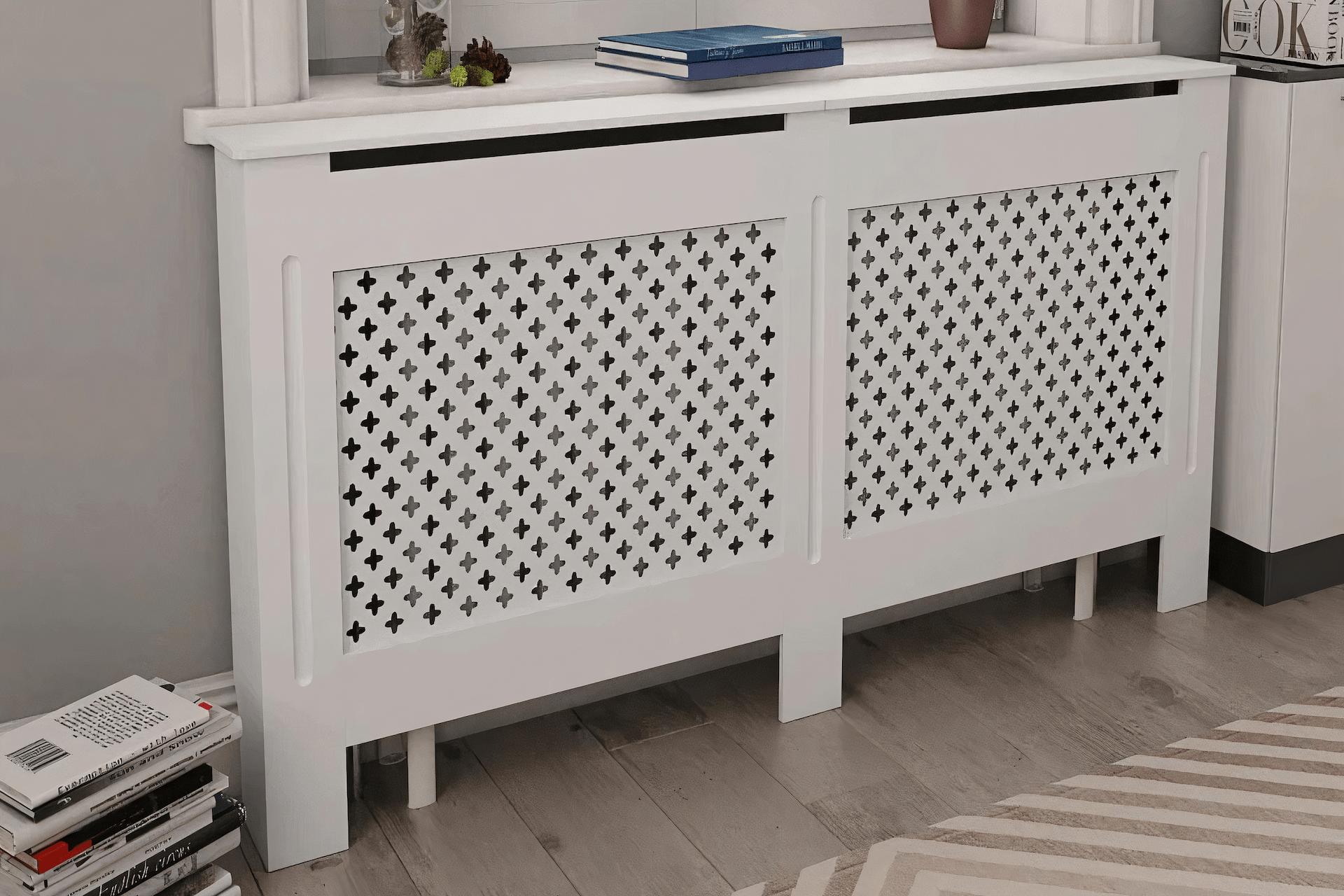
For many homeowners across the United Kingdom, balancing interior aesthetics with practical home management is a constant challenge. The humble central heating radiator, whilst essential for enduring the damp British winter, is rarely celebrated as a design triumph. Its metallic, functional appearance can clash with carefully curated decor, leading many to explore the option of wooden or composite enclosures. However, masking these metal panels involves a serious trade-off. What begins as a quick aesthetic lift can quickly spiral into an unintended battle against your utility bills if the physics of household energy transfer are ignored.
When evaluating how to modernise your living room or hallway, it is vital to acknowledge that radiator covers can affect heat output in a dramatic fashion. A poorly conceived enclosure acts as an accidental thermal barrier, trapping the warmth exactly where you do not want it. Central heating relies on a delicate balance of airflow and radiation to maintain a comfortable ambient temperature. Introducing a solid barrier directly into this cycle without understanding how energy moves through a room can drastically reduce the performance of your entire boiler system.
The Science of Radiator Performance
To understand why design choices matter so much, one must consider how a radiator actually functions. Despite their name, standard domestic radiators distribute energy using two distinct mechanisms: radiation and convection. Radiation accounts for roughly twenty per cent of the heat, pushing warmth directly outwards into the room in straight lines. The remaining eighty per cent is distributed via convection, which is the movement of air currents.
Convection works by pulling cold air upwards from the floor, drawing it past the hot metal fins of the radiator panel, and releasing the warmed, less dense air out towards the ceiling. This creates a continuous, circular current that warms the entire room evenly. When a decorative shroud blocks this natural pathway, the convective cycle is broken. The air becomes trapped inside the cabinet, tricking the thermostatic radiator valve (TRV) into believing the entire room has reached the desired temperature long before the warmth has actually spread.
Material Selection and Venting Strategies
The physical composition of your cabinet plays a defining role in how much energy is lost. Wood and Medium-Density Fibreboard (MDF) are the most popular choices due to their versatility and affordable price point, but they are naturally poor conductors of heat. Metal or mesh alternatives offer far superior thermal performance but require careful integration to avoid looking overly industrial.
Regardless of the base material, understanding that radiator covers can affect heat output means prioritising the configuration of the ventilation cut-outs. A solid front panel with a few decorative slots at the top will invariably suffocate the system. The ideal configuration demands a highly porous design that allows air to enter and escape with minimal resistance.
Essential Ventilation Design Features
To ensure your heating system operates at its peak, certain design parameters must be incorporated into any custom or retail cabinet purchase:
- Generous Floor Clearance: The bottom of the cabinet must sit at least ten to fifteen centimetres above the floor to allow cold air to be drawn into the convection cycle smoothly.
- Large Top Grilles: The top panel should feature expansive open mesh or slats rather than a solid shelf, allowing rising warm air to escape into the room instantly.
- Open Area Ratios: The patterned front of the unit should possess an open-to-solid ratio of at least forty per cent, ensuring radiant energy can pass through the facade.
- Internal Air Gaps: A minimum clearance of five centimetres must be maintained between the radiator panel and the internal walls of the cabinet to prevent localised overheating.
Maximising Thermal Efficiency with Clever Additions
If you are fully committed to installing an enclosure for aesthetic reasons or to protect young children from hot metal surfaces, there are several engineering adjustments you can make to mitigate the structural energy loss. These additions do not alter the external appearance of your furniture but can recover a vast percentage of the trapped warmth.
The most effective upgrade is the installation of a curved heat reflector sheet behind the radiator panel. Usually constructed from reflective foil and insulation material, these sheets bounce radiant energy away from the external brick wall and back into the living space. Inside a cabinet, this foil can also be attached to the underside of the top shelf, curving gently forward to guide the rising air currents out through the front grilles rather than allowing them to pool beneath the lid.
Smart Adjustments for Better Control
Beyond physical modifications to the structure, how you manage your heating controls will determine your overall efficiency:
- Remote TRV Sensors: Move the thermostatic valve head outside the cabinet using a remote sensor or smart thermostatic head to ensure accurate room temperature readings.
- Internal Foil Linings: Line the solid rear interior surfaces of the timber box with heat-reflective foil to prevent the wood from absorbing valuable thermal energy.
- Integrated Booster Fans: Consider low-voltage, silent axial fans hidden within the upper grille to actively drive warm air out into the centre of the room.
- Removable Front Panels: Ensure the front fascia can be easily detached for regular vacuuming of the internal metal fins, as dust build-up further degrades performance.
Finding the Perfect Structural Balance
Ultimately, the decision to install a cover should be guided by the specific demands of the room. In a drafty, north-facing extension where the boiler already struggles to maintain a comfortable temperature, an enclosure is generally inadvisable. Conversely, in a well-insulated modern home with underfloor backup or oversized radiators, a well-ventilated wooden cabinet can be integrated with negligible impact on comfort.
By focusing on high-porosity materials, ample spacing, and reflective backings, you can successfully merge interior styling with mechanical practicality. Consulting with a qualified heating engineer or a specialist joiner before committing to a purchase will ensure your home remains both beautiful and warm throughout the winter months.
Warmth and Style Reconciled
Enclosing a domestic radiator requires a careful compromise between visual appeal and thermal physics. While solid, poorly vented cabinets stifle convective airflow and inflate energy bills, an intelligent design featuring large air gaps, generous floor clearance, and reflective internal linings can minimise efficiency losses. Prioritising open-mesh facades and smart thermostat placement allows the essential circulation of warm air to continue unimpeded. By respecting these mechanical principles, you can successfully enhance your home’s interior aesthetic without sacrificing the comfort or cost-effectiveness of your central heating system.